 HAJMA
Why soccer quiz challenges?
Plain trivia runs out fast: question, answer, next. Challenges change the question itself — a name becomes a puzzle hidden in a career, a number both teams race toward, or an auction on who remembers more. That keeps game night lively, even with friends who know their soccer.
Here are 12 challenge ideas taken from Hajma’s categories, each with how to play it and an example to try right now. All you need is two teams and a ref — pen and paper works, or play in Hajma, where the questions, points and clock are ready for you. The full category list is in How to play.
12 challenges to play with friends
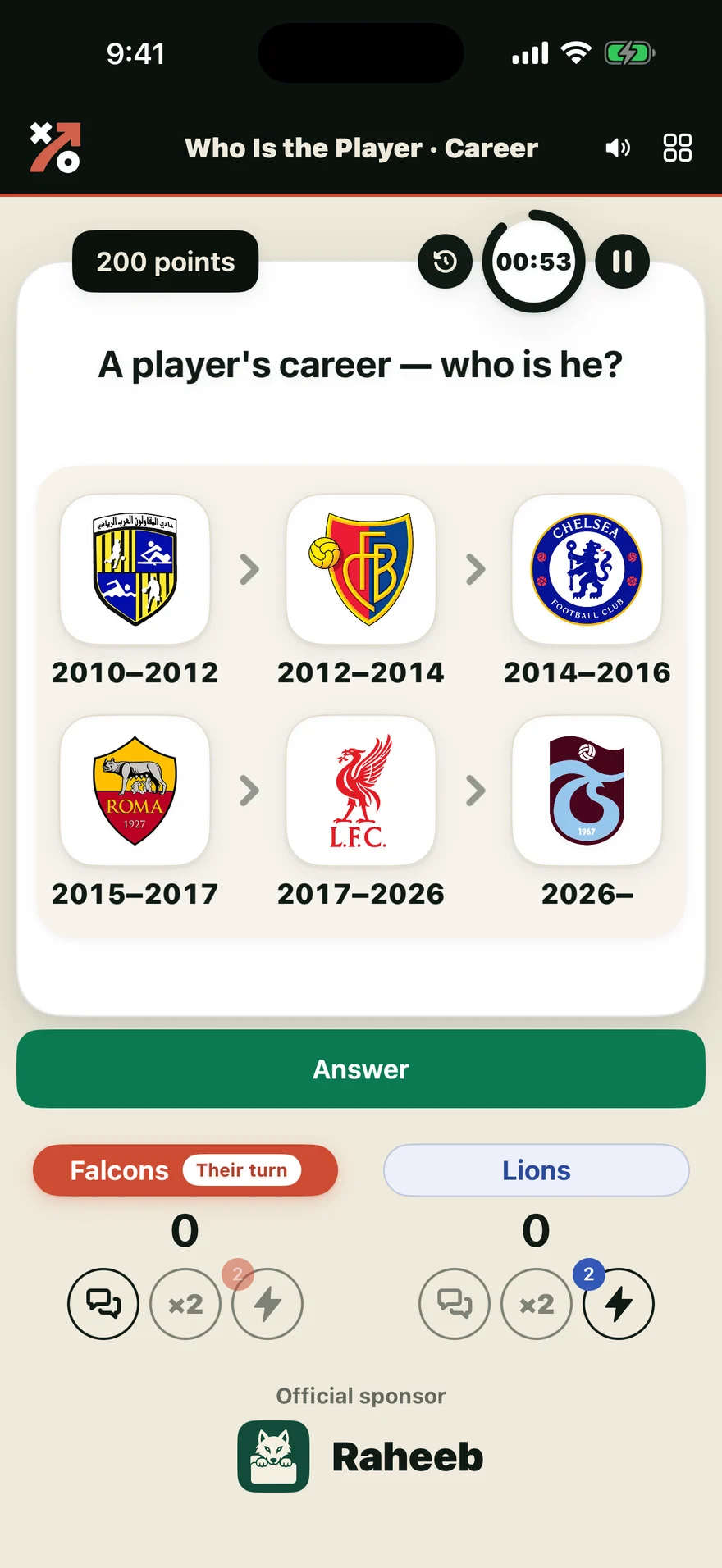
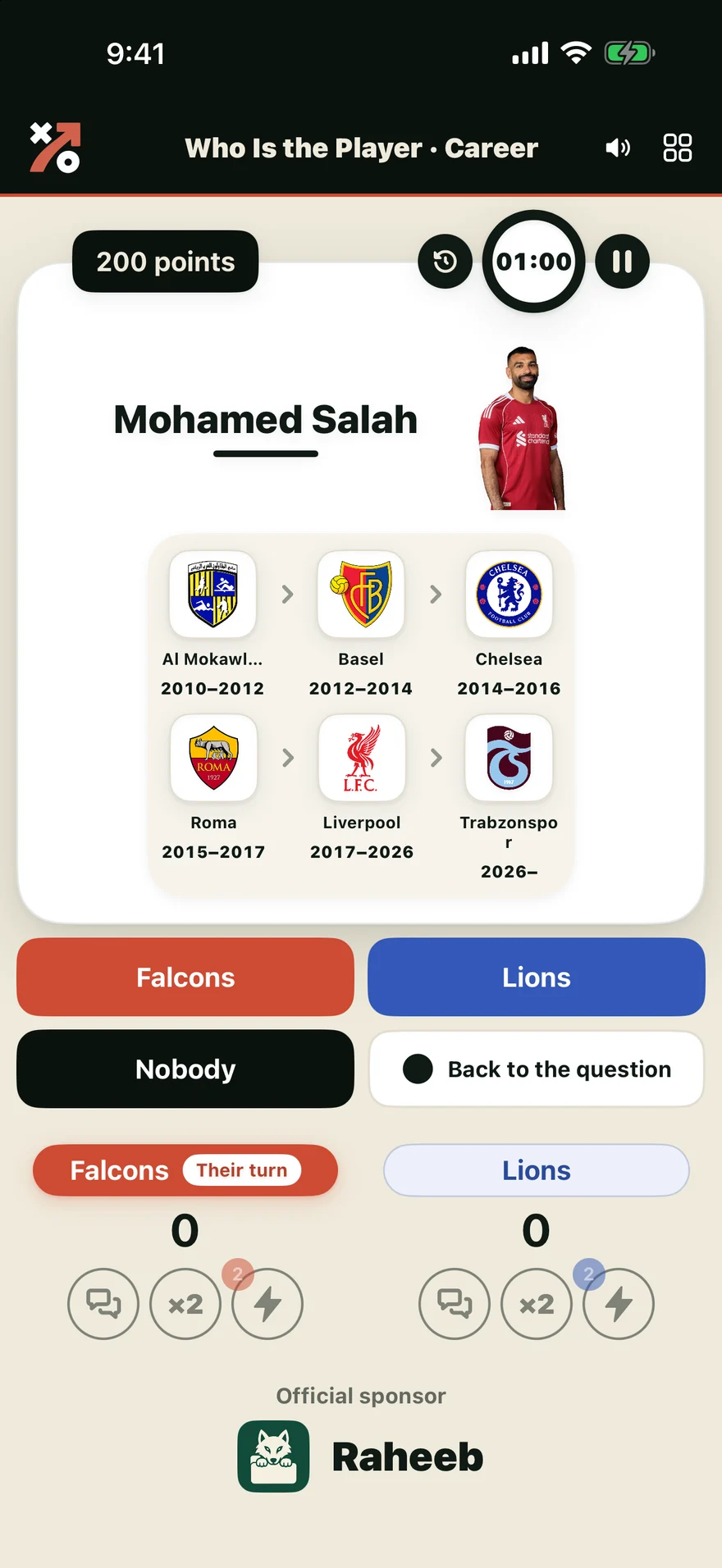
Who is he, from his career?
The ref reads a player’s clubs in order, with years, and the team names him. The more obscure the player, the more points.
Example: Sporting CP → Manchester United → Real Madrid → Juventus → Manchester United → Al Nassr. Answer: Cristiano Ronaldo.
The hint ladder
The ref opens clues one at a time, and each new clue lowers the points. The trick is daring to answer early.
Example: French → started at Monaco → won the 2018 World Cup → the World Cup’s all-time top scorer. Answer: Kylian Mbappé.
Name the national team from the lineup
A real match lineup on a pitch, with each player shown by his club crest instead of his name. Name the team — and the match.
Example: Eleven cards on the pitch, mostly Spanish and English club crests: is it Spain? Which final?
Name the club from the lineup
The reverse: a club lineup from a famous match, each player shown by his nationality flag.
Example: English, Ivorian, Czech and Portuguese flags in a 2012 European final: which club?
The missing transfer
A career of four or more clubs with one missing from the middle. Name the missing club.
Example: Santos → ? → Paris Saint-Germain → Al Hilal. Answer: Barcelona (Neymar’s career).
The connection
Two players who never shared a club. Name someone who played with both. More than one answer can be right.
Example: Lionel Messi and Cristiano Ronaldo? Ángel Di María played with Ronaldo at Real Madrid and with Messi at Paris Saint-Germain.
The buried number
The answer is a number — an age, a height, a year. Each team writes one down, and the closest wins, even if nobody is exact.
Example: What year did Zinedine Zidane join Real Madrid? Answer: 2001 — so 2000 beats 2003.
Oldest to youngest
Four players — put them in age order. Easy, until two of them were born months apart.
Example: Kylian Mbappé, Salem Al-Dawsari, Lionel Messi, Cristiano Ronaldo. Order: Ronaldo (1985), Messi (1987), Al-Dawsari (1991), Mbappé (1998).
Blurred and cropped photos
A player photo blurred from start to finish, or a strip showing only his eyes. Harder than you think, even with players you know.
Example: A thin strip with just eyes and eyebrows: can you tell two teammates apart?
The lie
One player reads a fact and defends it as true; the other team rules: truth or lie?
Example: “Miroslav Klose scored 16 World Cup goals.” True — but a confident voice can make rivals doubt it.
Describe without the name
One player describes a player or club to his team in 60 seconds — no names, no clubs. Every right answer brings a new card.
Example: You say: “Soviet goalkeeper, the only one in his position to win the Ballon d’Or.” Your team shouts: Lev Yashin.
The auction
Teams bid on how many answers from a list they can name; the winning bidder must deliver them all.
Example: “Name the World Cup winners.” Eight teams: Brazil, Germany, Italy, Argentina, France, Uruguay, Spain, England.
How to run a challenge night
- Split the room into two teams of any size and pick a ref who doesn’t play — they read, reveal and judge.
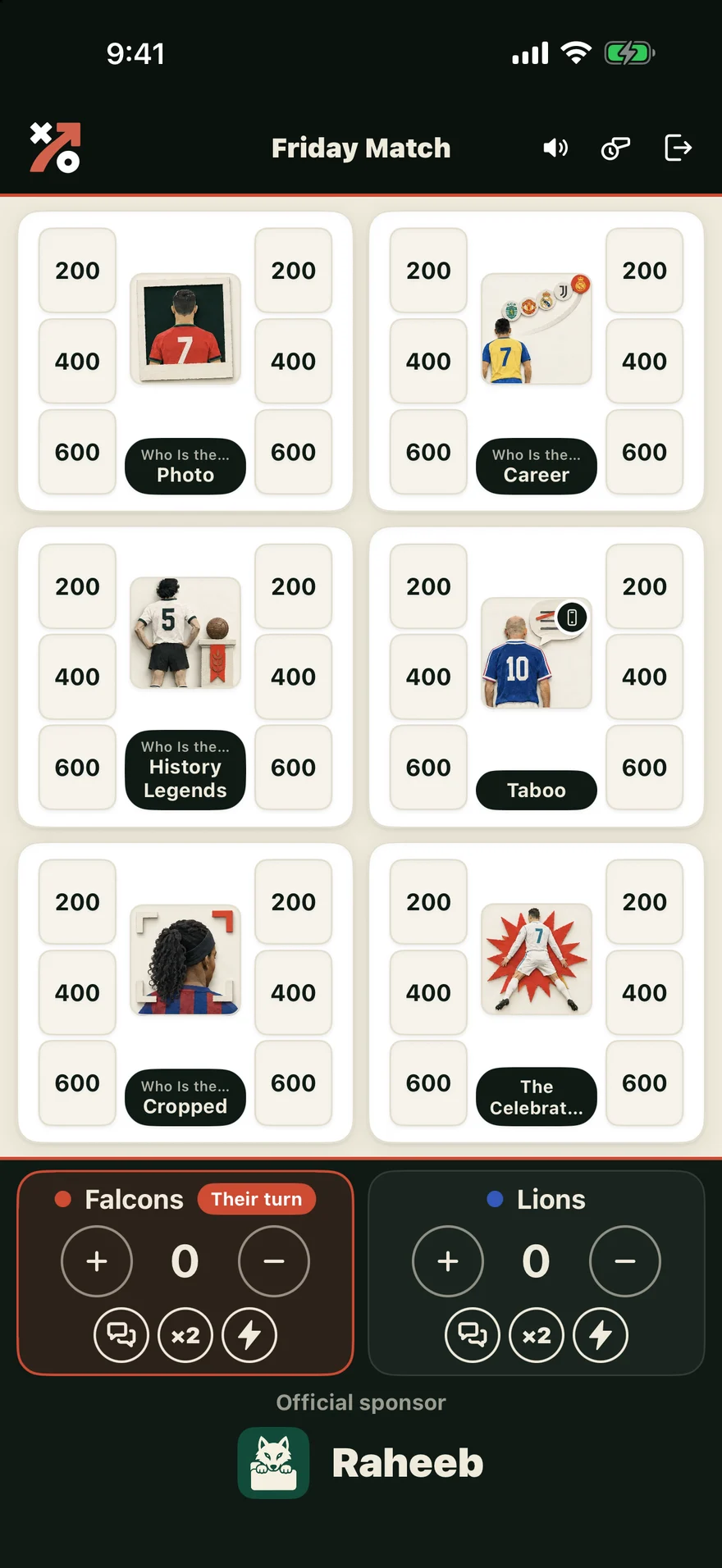
- Pick six challenges, three per team, each with questions worth 200, 400 and 600 points.
- Put a clock on every question — 30 seconds for easy, up to 60 for hard. Run out and you lose the turn.
- Let the other team steal a question their rivals miss — it keeps everyone locked in.
Mistakes that ruin a challenge night
- Every question at one level: all easy bores the experts, all hard loses the beginners. Mix the values in every category.
- A ref who also plays: the ref knows the answers, so keep them neutral — and rotate the role between rounds so everyone plays.
- Answers open to debate: “Who is the best player in the world?” is an argument, not a question. Stick to questions with one checkable answer.
- Stale numbers: trophy counts and scoring lists change every season, so check them first. That is why every article here shows its update date.
- No clock: without a timer, thinking drags and the energy fades. Thirty seconds for easy questions is plenty, sixty for hard ones.
Play them in Hajma
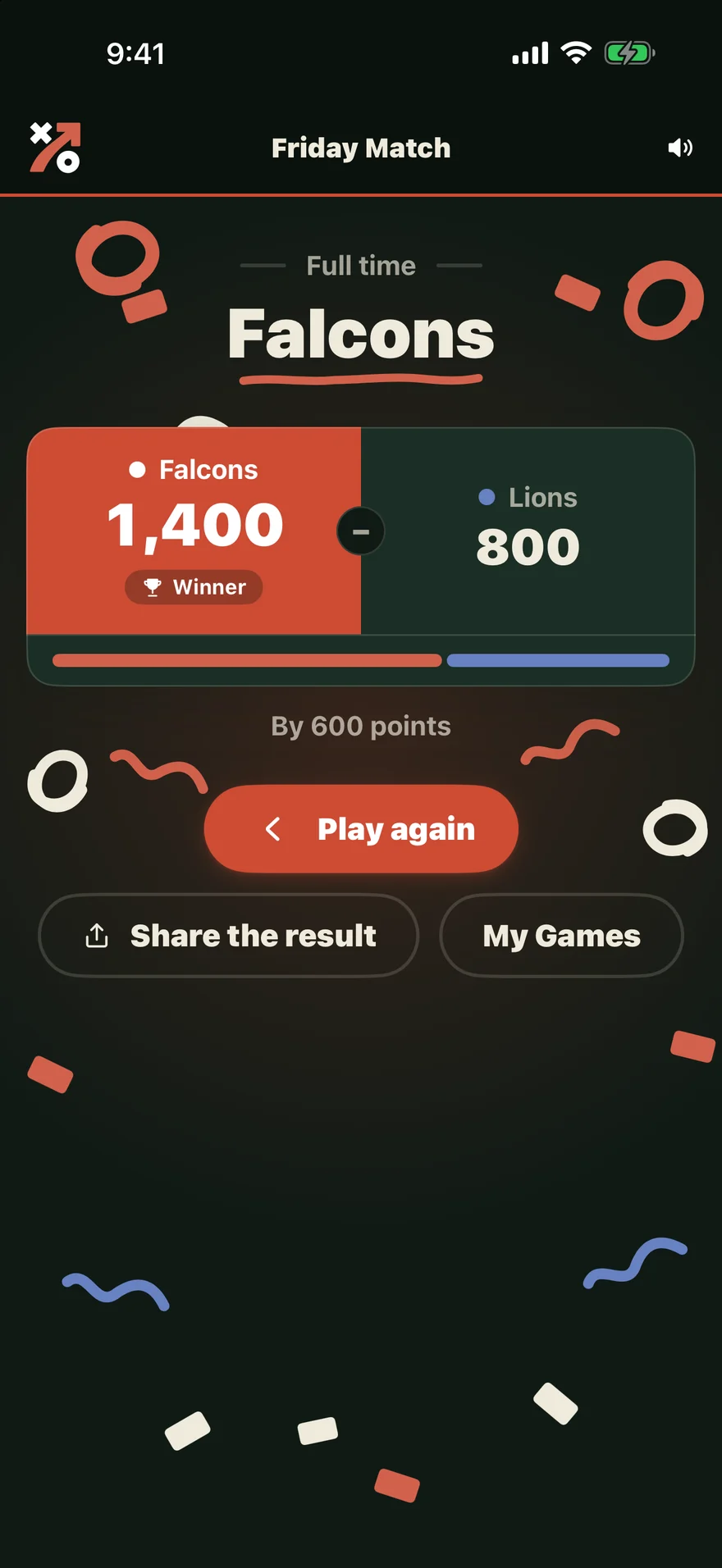
Hajma is a two-team soccer quiz on one screen, playable in the browser or on iPhone with one account. Each team picks three categories for a six-category, 36-question board, and the ref reads from a TV or phone and judges in one tap. Lifelines, steals and the hint ladder are built in, along with player photos and lineups.
Want to warm up first? Try easy soccer questions and medium questions, then move on to 30 hard soccer questions with answers. Everything lives in the question library.